
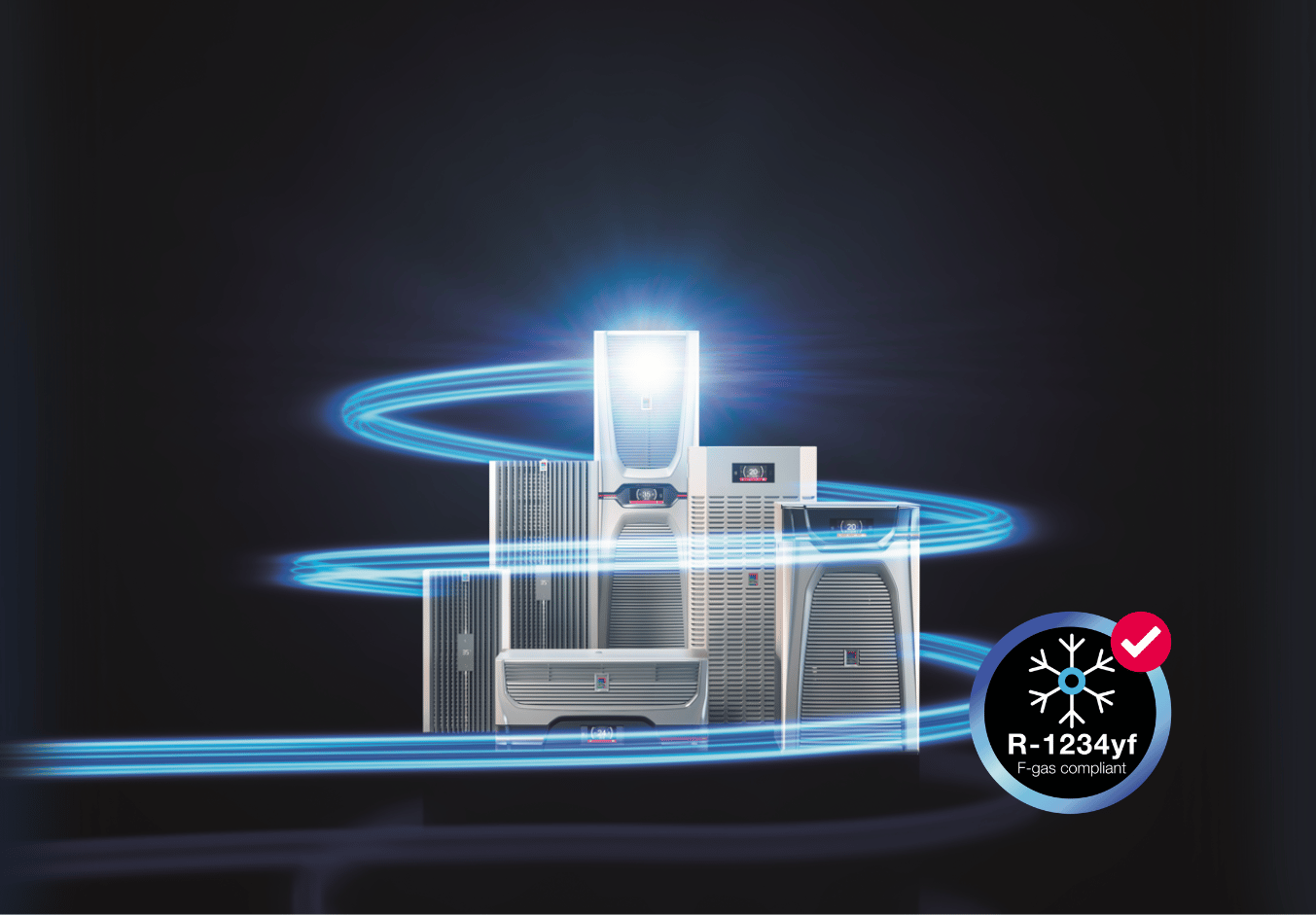
The regulatory landscape around industrial climate control is changing rapidly across Europe. For UK industrial manufacturers, panel builders, and facility managers, particularly those exporting machinery to the EU or operating multi-site international facilities, upcoming environmental standards bring pivotal decisions regarding cooling equipment.
At the centre of this transition is F-Gas Regulation (EU) 2024/573, which imposes phased restrictions on high-Global Warming Potential (GWP) fluorinated greenhouse gases.
What is the New F-Gas Regulation (EU) 2024/573?
Under the revised F-Gas Regulation (EU) 2024/573, tighter rules governing the use of chemical refrigerants will come into force on 1 January 2027.
Crucially, these regulations specifically apply to new equipment being placed on the EU market. If you are operating existing, already-installed infrastructure, the regulation does not mandate an immediate removal or retrofitting of functional units. However, any new machinery, systems, or control cabinets intended for export to the EU after the deadline must comply with these strict parameters:
- Strict GWP Limit: Many self-contained industrial cooling and climate control applications will be required to use refrigerants with a GWP of less than 150.
- Phase-Out of Popular Gases: Commonly used refrigerants such as R-134a (GWP ~1,430) and R-513A (GWP ~631) will effectively be outlawed for new targeted applications.
While Great Britain operates under its own GB F-Gas framework, alignment across international supply chains means preparing for EU standards ensures your equipment remains universally deployable.
Why You Need to Act Now (Before 2027)
While 2027 may seem far off, delaying fleet or build updates introduces unnecessary operational and commercial risks:
- Investment Certainty: Upgrading ahead of time protects your capital expenditure from premature obsolescence, ensuring equipment installed today remains fully compliant for its operational lifetime.
- Avoiding Supply Chain Bottlenecks: A sudden, last-minute rush across industry toward compliant equipment risks supply chain delays, longer lead times, and resource constraints.
- Operational Stability: Planning a systematic phase-in during scheduled design or maintenance cycles avoids unplanned downtime, retrofitting costs, or emergency changeovers.
The Solution: Rittal’s Comprehensive Climate Control Range
To help UK businesses navigate statutory requirements and maintain seamless international compliance, Rittal offers an extensive portfolio of climate control solutions engineered to meet diverse operational needs and environmental standards.
- Energy Efficiency: Advanced hybrid cooling technologies, such as those in the Blue e+ series, deliver energy savings of up to 75% compared to traditional climate control units.
- Seamless Retrofitting: Rittal ensures legacy compatibility across model refreshes, using identical enclosure cut-outs and dimensions to eliminate mechanical panel re-engineering when upgrading systems.
- Versatile Application Choices: Recognising that operating environments vary widely, Rittal provides a full range of cooling units, including the established Blue e range using R-513A, ensuring the right option is available whether you require ultra-low GWP compliance or dedicated performance in specialised environments.
- Future-Proof Assurance: Partnering with Rittal insulates your operations and machinery designs against ongoing chemical phase-downs across Europe.
Need Help Choosing?
Selecting the right enclosure cooling solution isn’t simply about choosing a product. The correct solution depends on heat load, ambient conditions, operating requirements, and long-term performance objectives.
BPX technical specialists can help assess your application and recommend the most suitable climate control solution from our Rittal portfolio.
Whether you’re looking to improve energy efficiency, protect critical equipment, or prepare for rising summer temperatures, get in touch, we’re here to help you make an informed decision.