
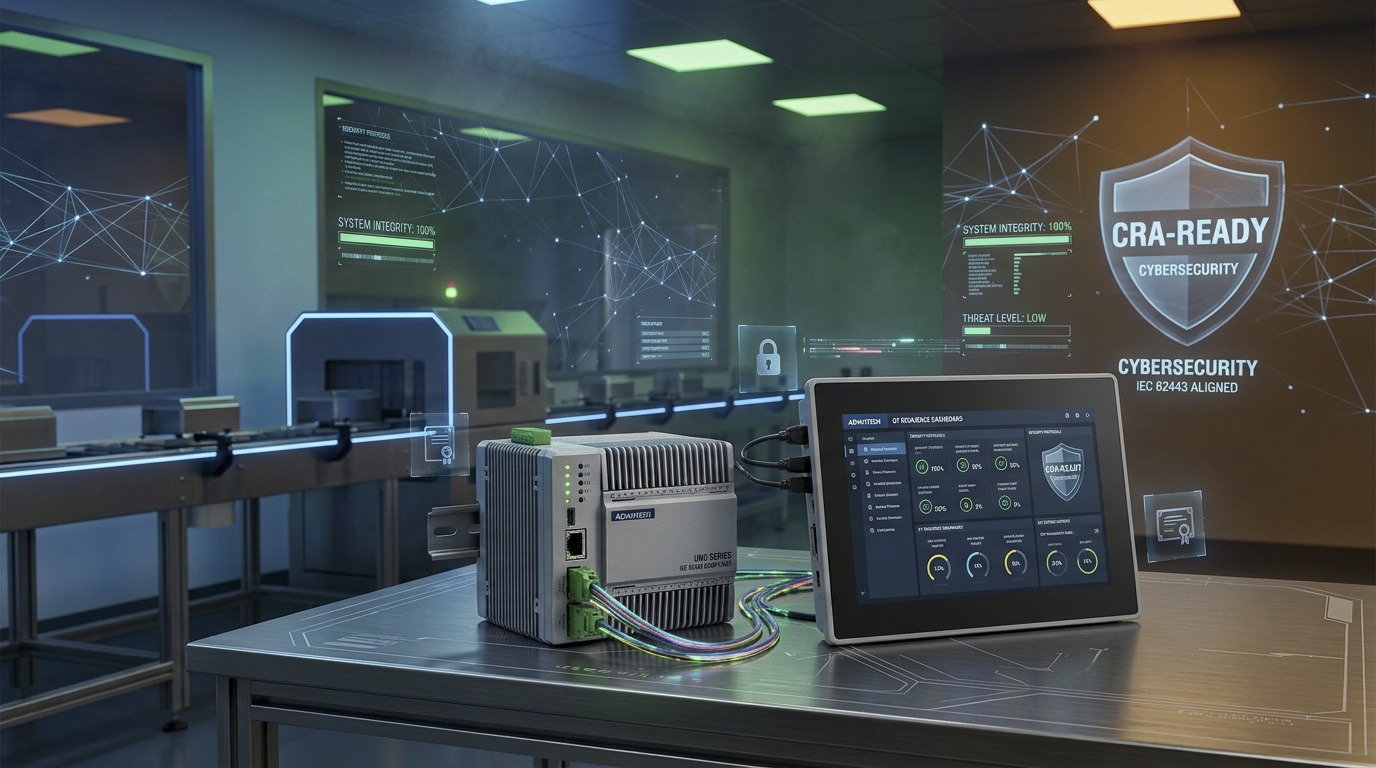
As modern manufacturing floors across the UK become increasingly connected to enterprise networks and edge-cloud platforms, the boundaries between physical machine safety and operational technology (OT) cybersecurity have disappeared. A cyber incident on an unsecured edge terminal is no longer just an IT issue or a data concern, it is a direct threat to physical operator safety, machinery uptime, and regulatory compliance.
With evolving global security frameworks alongside UK regulations like the Product Security and Telecommunications Infrastructure (PSTI) regime and Make UK industry guidelines, relying on ageing industrial hardware is becoming a critical risk factor. Now is the ideal time for UK machine builders, system integrators, and plant engineers to evaluate legacy equipment, assess cyber-physical risks, and plan modern hardware upgrades with technical support from BPX.
The Convergence of Functional Safety and Cyber Resilience in the UK
Historically, machine safety focused on physical protection measures: light curtains, interlocks, e-stops, and safety relays governed by standards like BS EN ISO 13849-1. However, as Industrial PCs (IPCs), Human-Machine Interfaces (HMIs), and edge devices handle direct machine monitoring and supervisory control, software vulnerabilities can undermine physical safeguards.
Regulatory and compliance expectations are shifting to address this connected reality:
- Evolving Safety Standards: Mandate that cyber threats capable of altering machine control logic or disabling safety-related parts of control systems (SRP/CS) must be systematically prevented.
- EU Cyber Resilience Act (CRA) & Global Export Alignment: Establishes mandatory cybersecurity requirements for all products with digital elements, enforcing “Security by Design” and “Security by Default.” For UK manufacturers exporting into Europe or integrating into global supply chains, CRA readiness is essential for seamless market access.
- UK PSTI & National Cyber Guidance: Mirrors global directives by penalising default passwords, unmanaged software assets, and lack of clear vulnerability reporting, making cyber-resilient OT infrastructure a baseline priority.
If an IPC or HMI controlling line operations uses unpatched software, weak authentication, or unsecured management ports, it exposes the entire physical process to unauthorised access.
Positioning IPC & HMI Hardware with IEC 62443-4-2
To address these emerging mandates without burdening engineering teams with complex, custom security overhauls, hardware suppliers must build protection directly into the device level.
IEC 62443-4-2 is the benchmark international standard adopted widely across UK manufacturing for technical security requirements in Industrial Automation and Control System (IACS) components. Choosing IPCs and HMIs pre-architected or certified to IEC 62443-4-2 provides clear, verifiable alignment with CRA requirements across key operational domains:
- Identification & Authentication: Requires robust Role-Based Access Control (RBAC) and strict credential rules. This prevents unauthorised operators, unverified users, or rogue network devices from tampering with or changing critical control parameters on factory floors.
- Use Control: Enforces strict lockout mechanisms, session management policies, and interface blocking. This restricts both local and remote terminal access strictly to authorised engineering personnel.
- System Integrity: Incorporates hardware-rooted secure boot, signed firmware updates, and continuous software asset integrity checks. This guarantees that OS environments and control applications cannot be tampered with or compromised during remote updates.
- Data Confidentiality & Protection: Integrates encrypted storage and secure management communication protocols (such as HTTPS and TLS). This protects sensitive process data, proprietary manufacturing recipes, and access credentials both in transit and at rest across plant networks.
Advantech’s CRA-Ready Portfolio: UNO, MIC, and TPC Platforms
Advantech is at the forefront of cyber-resilient automation hardware. By developing hardware and embedded software in alignment with IEC 62443-4-1 (Secure Development Lifecycle) and IEC 62443-4-2 (Component Security), Advantech provides a “CRA Ready” foundation across its industrial computing lines:
- Advantech UNO Series (Compact & Modular Box PCs)
Designed for machine control, gateway communication, and edge processing. UNO box PCs feature hardware-rooted security (such as TPM 2.0 modules), encrypted boot capabilities, and secure OS images that simplify deployment in space-constrained control cabinets.
- Advantech MIC Series (High-Performance Fanless Modular IPCs)
Built for complex, compute-heavy edge processing and AI-assisted visual inspection. MIC modular systems combine multi-core processing power with robust device management tools and hardened communication interfaces needed for higher security zones (Security Level 2 / SL 2).
- Advantech TPC & FPM Series (Industrial Panel PCs & HMIs)
Front-line operator terminals requiring secure-by-default user access. TPC series touch panel PCs integrate hardened user authentication, sealed IP-rated front panels for harsh UK factory environments, and secure interface handling to ensure line-side operator panels do not become entry points into OT networks.
How BPX Supports Your Modernisation Path
Replacing legacy hardware or retrofitting security measures into existing UK production lines requires a structured, practical approach. As a trusted technical distributor and solution partner, BPX helps machine builders (OEMs), system integrators, and end users upgrade their architectures seamlessly.
- Assess Ageing Equipment & Network Risk Boundaries – Targeting legacy HMIs and unmanaged IPCs.
Evaluate legacy controllers, unpatched operating systems, and unmanaged edge terminals to identify points where security vulnerabilities could impact operational safety or production continuity.
- Define Security Zones & IEC 62443 Conformance Levels – Mapping physical topology to logical security tiers.
Establish network segmentation and map hardware requirements against IEC 62443 standards to ensure appropriate protection levels without over-specifying equipment.
- Select Pre-Validated Advantech IPC & HMI Hardware – CRA-Ready and IEC 62443-4-2 aligned platforms.
Match application processing needs with Advantech UNO, MIC, or TPC series hardware featuring built-in TPM 2.0, secure boot capabilities, and long-term operating system support.
- Implement Secure Configuration & Long-Term Patch Management – Maintaining resilience throughout the machine lifecycle.
Apply “Secure by Default” settings, disable unused physical ports, configure role-based access, and establish long-term maintenance workflows supported by BPX’s UK-based technical application engineers.
Prepare Your Operations for Evolving Standards Today
Deferring hardware upgrades until regulatory deadlines pass creates operational bottlenecks and increases risk exposure. By transitioning to Advantech’s CRA-ready IPC and HMI solutions, UK manufacturers can safeguard machinery against physical safety hazards and emerging cyber threats simultaneously.
Speak with our team today to review your current control projects and explore our range of Advantech industrial computing platforms.